The Philippine central bank wants every payment to name who gets paid. The Bangko Sentral ng Pilipinas circulated a draft circular this month, Regulations to Strengthen Integrity Controls in Payment Transactions, which would amend the Manual of Regulations for Payment Systems. It says a supervised institution may not establish, maintain or facilitate a payment arrangement that "obscures the identity of a merchant, intermediary, underlying merchant, or ultimate beneficiary," that "fragments accountability," or that "prevents transaction reconstruction."
That is a plain standard, and it is the correct one. Every payment should have a named recipient and a trail somebody can rebuild afterward.
What the draft closes
The practice in question is structural. A platform outside the Philippines wants to accept payments from people inside it. Instead of getting licensed or signing directly with the local bank that processes card and QR payments, it sits behind an intermediary that holds the merchant registration. Payments arrive through familiar local rails. The bank sees the intermediary on its records. The party collecting the money does not appear.
Most layered arrangements exist for ordinary commercial reasons, and the draft still permits them for ordinary merchants under defined controls. What it stops is the version where the layer is the point: where the structure is what keeps the recipient off the record.
The draft also names categories of merchant that banks may only accept directly, with enhanced due diligence attached:
- gambling and gaming operators
- adult content
- licensed virtual asset businesses
- money service businesses, including remittance and transfer companies, foreign exchange dealers and remittance platform providers
Foreign merchants and foreign intermediaries get their own verification test. Part of it asks whether their records can be obtained "without material contractual, technical, secrecy, localization, or jurisdictional impediment."
What it asks
For institutions already operating, the draft sets a clock. They get six months from the date the rule takes effect to review every layered merchant arrangement, and six more to fix anything that does not pass. Then the chief compliance officer signs a compliance certification. The BSP will enforce against arrangements still non-compliant after twelve months.
The BSP will build a National QR Code Merchant Database on a parallel timeline:
- an interim repository within ninety days
- a governance framework and data standards for approval within six months
- the production database within twelve months
- all active merchant records migrated within fifteen months
The BSP would also stop accepting new Operator of Payment System registrations for twelve months while it reviews how it classifies and licenses payment operators. It keeps reviewing applications already filed but won't approve or deny any until the pause ends. The circular takes effect fifteen calendar days after publication.
For the next year, a foreign provider that wants to serve Philippine businesses reaches them through an institution that already holds a licence. The partnership conversation now matters more than the licensing conversation.
Why this is the right call for the corridor
The Philippine outsourcing and call-center industry passed $40 billion in revenue in 2025 across roughly 1.9 million jobs. Those are dollars earned abroad that have to land at home. The firms earning them are exporters with clients in the United States and Europe. They depend on banks that are willing to support the corridor at scale.
Supervision is what makes that support possible. A bank cannot take on payments when it can't see who sends or receives them, and it should not try. When arrangements hide who gets paid, the cost does not stay with the party that built them. Banks scrutinize the honest firms' payments more closely. Banks carry risk they cannot see. Every foreign institution deciding whether to touch the corridor trusts it less.
Clear rules widen the set of institutions that can safely participate. A defined standard for merchant visibility, a shared merchant database and a direct relationship requirement for higher-risk categories give a Philippine bank the basis to say yes to partnerships it would otherwise decline. More of those partnerships means more banks willing to pay out to Filipino exporters.
How money moves through Oncade, against the same test
We build for international payments into markets like the Philippines. Here is our own flow against the draft's standard.
We run know-your-business checks on the company receiving the funds, then issue it an account number in its own name. Its client in the United States or Europe pays into that account. We identify both ends of the payment before the first dollar moves.
Between receipt and payout, we settle the value as 1:1 US dollar-backed stablecoins. That is the settlement layer underneath, the way correspondent banking is the settlement layer underneath a wire, and it is why the dollars do not wait on a batch window. A licensed local partner pays the pesos into a local bank account over InstaPay and PESONet. We screen every user and every transaction, and the evidence exports, so an auditor who never saw the payment can trace it end to end.
We do not hold a Philippine licence, and we are not looking for a structure that behaves like one. Where we work with a bank or a licensed local provider, we expect to sit in their vendor register under our own name, inside their controls, as a supplier they vet. You can see which markets we reach and how on our country coverage page and in our explanation of how dollars move.
The question we would rather work through than answer alone
The draft's list of categories requiring a direct merchant arrangement includes remittance platform providers. Our flow is a receiving account and a payout, not merchant payment acceptance. How that category applies to cross-border business collections is a question for counsel and for the compliance teams at the institutions we work with. We would rather work it through with them while the draft is still a draft.
If you run transaction banking or compliance at a Philippine institution and you are working through what this means for your merchant portfolio, we would welcome the conversation. You can reach us through our Philippines page.
The draft circular is published on the BSP website under Issuances of Policy Exposure Drafts, as Draft Circular on Regulations to Strengthen Integrity Controls in Payment Transactions. Quotations above are from that text.
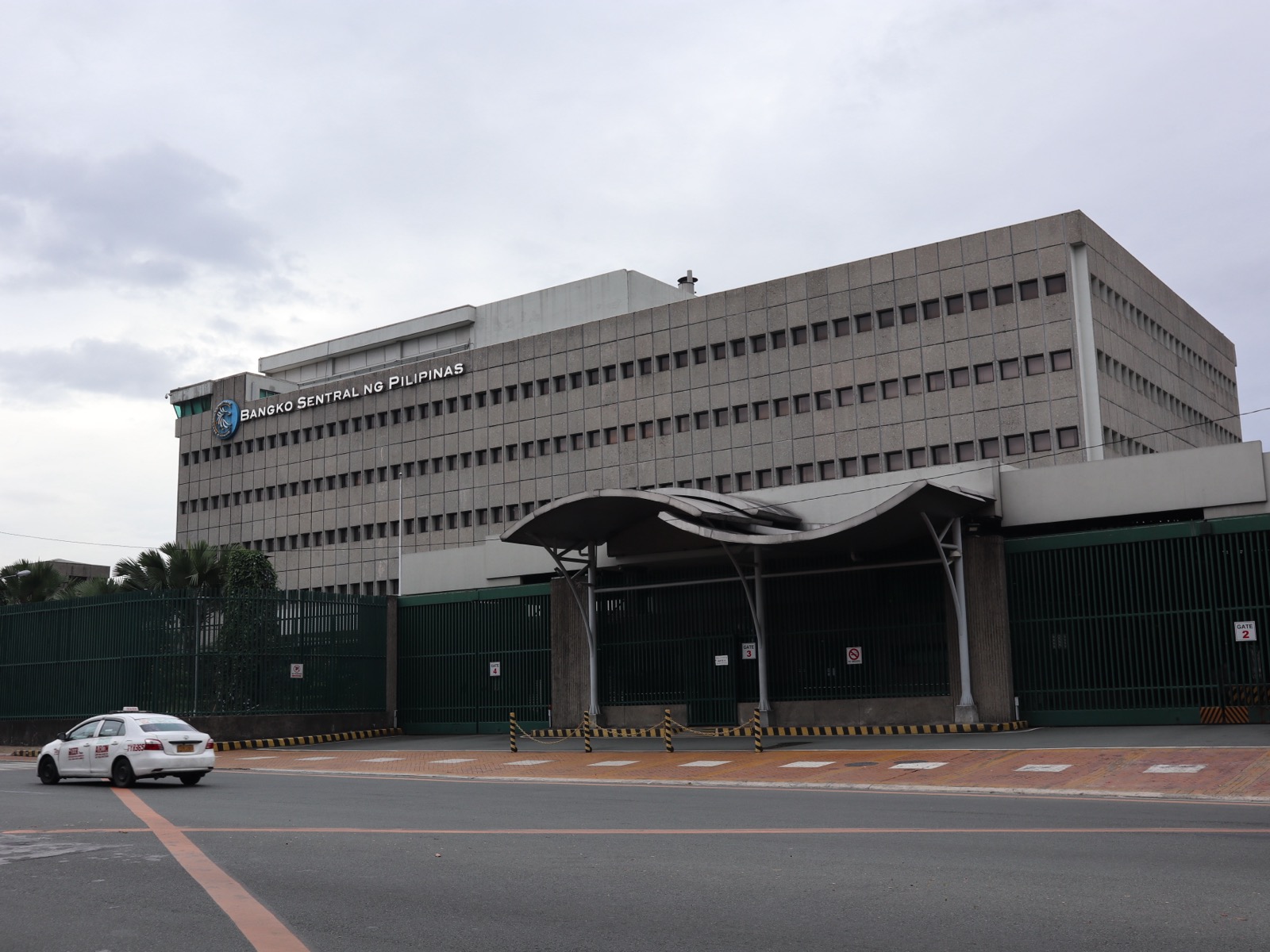
Photo: Bangko Sentral Security Plant Complex, Quezon City, by patrickroque01, CC BY-SA 4.0, via Wikimedia Commons.